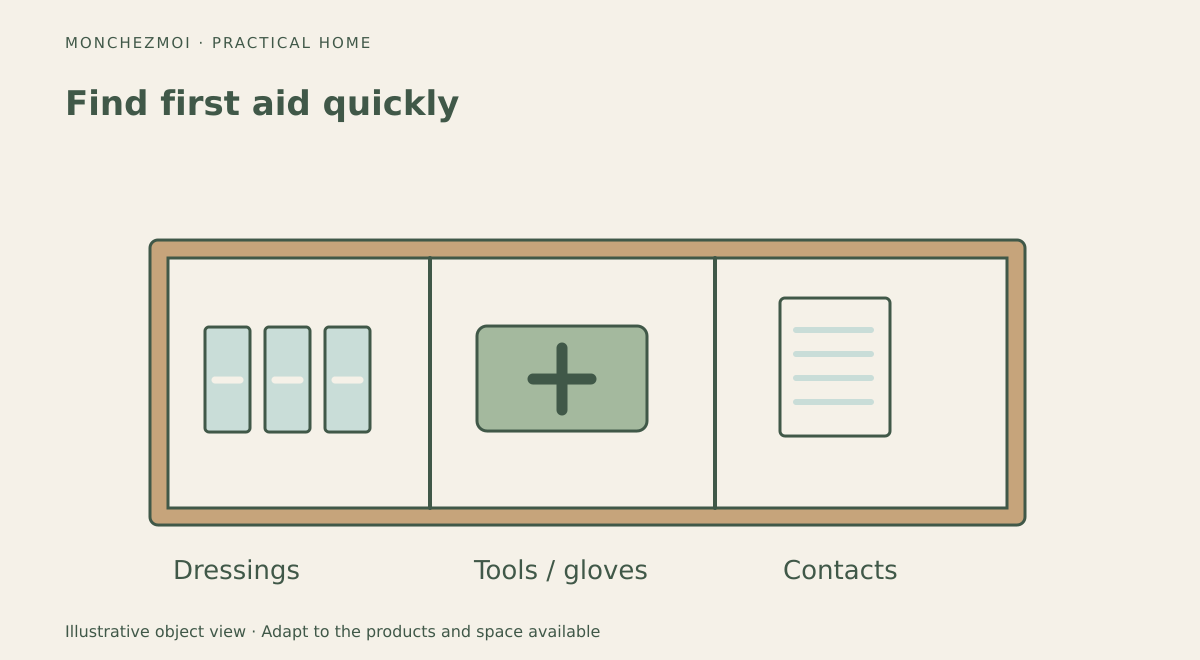
A home first-aid cabinet should make basic supplies easy to locate when someone needs help. It should not require digging through loose bandages, old medicine boxes and half-empty containers. The simplest approach is to organize first-aid materials by function, keep the core kit together and store medicines according to their own safety requirements.
Choose a dry, predictable location
The Canadian Red Cross recommends keeping first-aid kits in a dry, readily accessible place and ensuring that everyone knows where the kit is. A high cabinet or secured closet shelf may work, provided responsible adults can reach it quickly. A damp bathroom is not automatically the best choice, particularly for products whose labels require dry storage.
Build the kit around useful categories
A basic home kit may include adhesive bandages in assorted sizes, sterile gauze, adhesive tape, roller bandages, disposable non-latex gloves, scissors, tweezers, antiseptic wipes or soap, a thermometer, instant cold packs and a barrier device for CPR. The Canadian Red Cross also lists emergency contact information, an emergency blanket and a first-aid manual among suggested supplies.
The precise contents should reflect household needs and relevant first-aid training. Specialized supplies are not helpful if nobody knows how to use them. A kit is a complement to emergency services, not a replacement for medical assessment.
Use the same clear naming scheme as our guide to visual storage labels so everyone can identify the right compartment.
Organize by purpose, not package shape
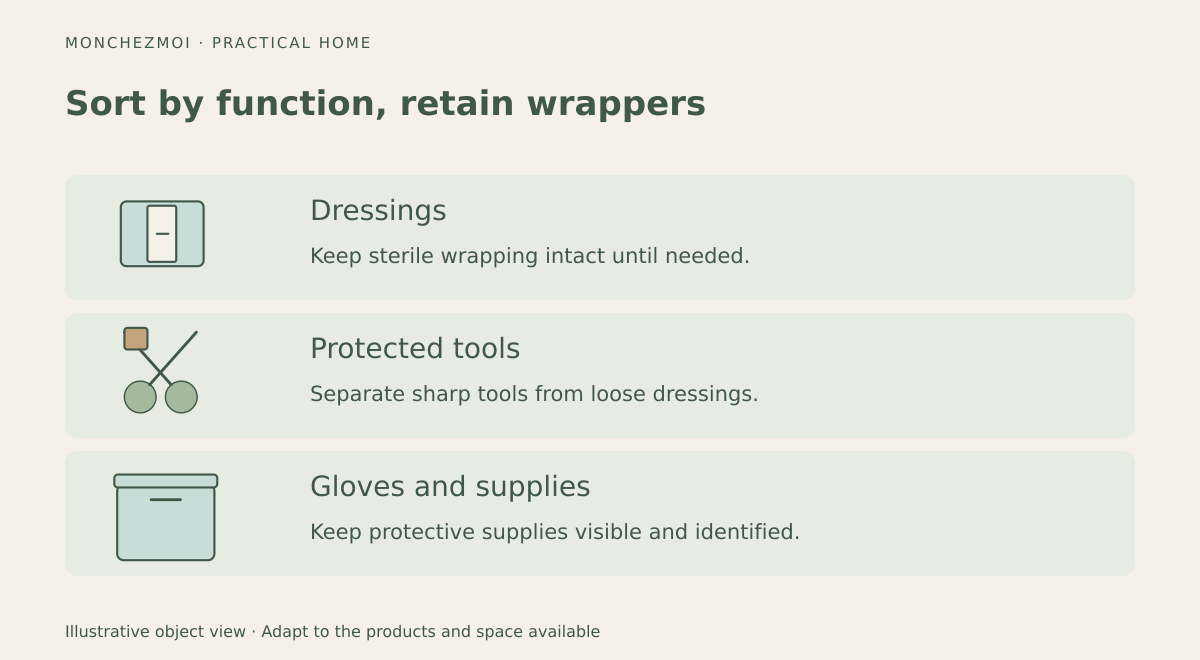
Group wound dressings together, place tools in a separate small pouch, and keep protective equipment and other emergency accessories identifiable. Transparent bins or divided boxes can help, but they should not require opening several lids to reach basic bandages.
Keep sterile supplies in intact original wrapping until needed. Do not decant antiseptics into unlabelled containers. Place frequently needed basics toward the front, with less common items behind them. Labels such as “dressings,” “tools” and “gloves” are more helpful than a complicated colour code.
Keep medicines separate and secure
A first-aid cabinet does not need to double as an open-access medicine cabinet. Prescription and over-the-counter medications should remain in their original labelled containers and be stored according to their specific directions, including any refrigeration requirements. Secure them from children and other people who should not have unsupervised access.
If the household chooses to keep medications nearby, use a distinct secure compartment rather than mixing loose pills with bandages. Do not combine different medicines into one unlabelled bottle. Ask a pharmacist when a storage instruction is unclear.
This is an example of storing supplies by activity and point of use: keep the working kit near the task and the reserve elsewhere.
Make a small cabinet work harder
Use shallow compartments so the contents remain visible. A removable pouch for wound care can be easier to carry to the person needing assistance than a rigid cabinet drawer. Avoid stacking heavy containers over supplies that may be needed quickly.
In a shared home, tell everyone where the kit is located. For children, explain whom to call for help rather than encouraging unsupervised use of medicines or sharp tools.
Check supplies every six months
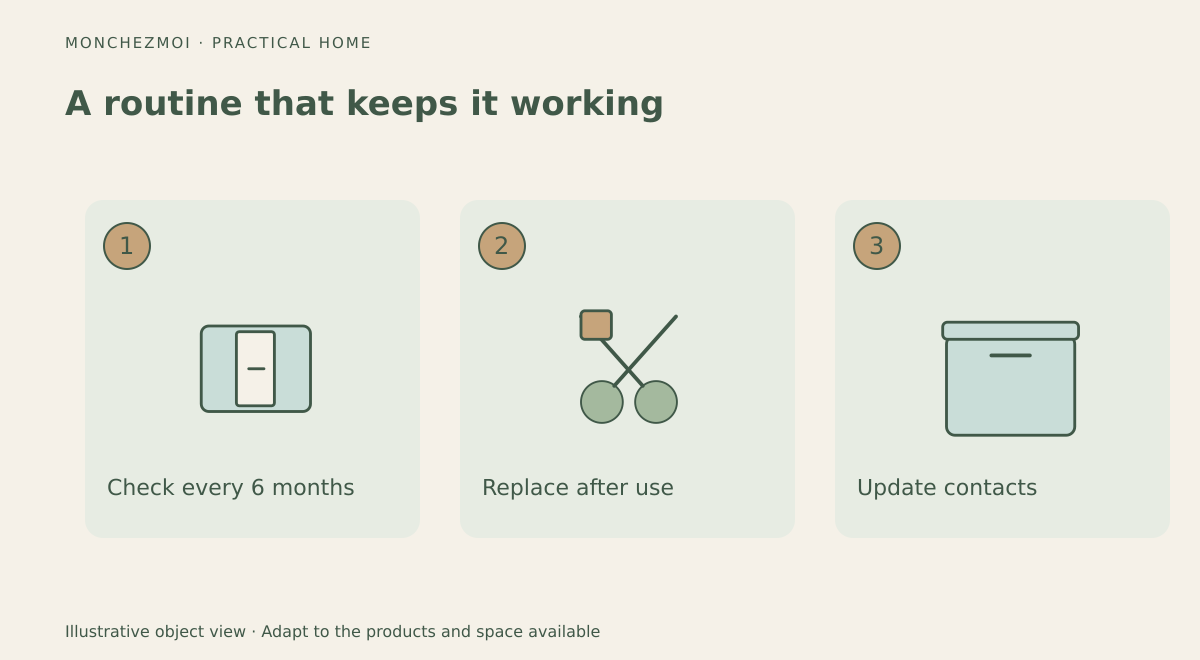
The Canadian Red Cross recommends checking kit contents every six months, replacing expired, damaged or contaminated supplies and restocking immediately after use. A date written inside the cabinet door can serve as a reminder. Inspect sealed dressings, packaging integrity and expiry dates where applicable; do not assume an unopened item remains usable indefinitely.
In Québec, expired or unused medicines should be returned to a pharmacy, generally without charge. Do not put them in household garbage or pour them into drains. Used needles and other sharps need appropriate designated containers and handling; check pharmacy or local health guidance before returning them.
Keep the supporting records in a backed-up household digital archive, with access limited to the people who need them.
Keep emergency information with the kit
Key takeaways
A good first-aid cabinet is compact, dry, clearly labelled and known to the household. Group supplies by function, secure medicines separately, and inspect the kit twice a year. The goal is reliable access to usable supplies, not the largest possible collection.