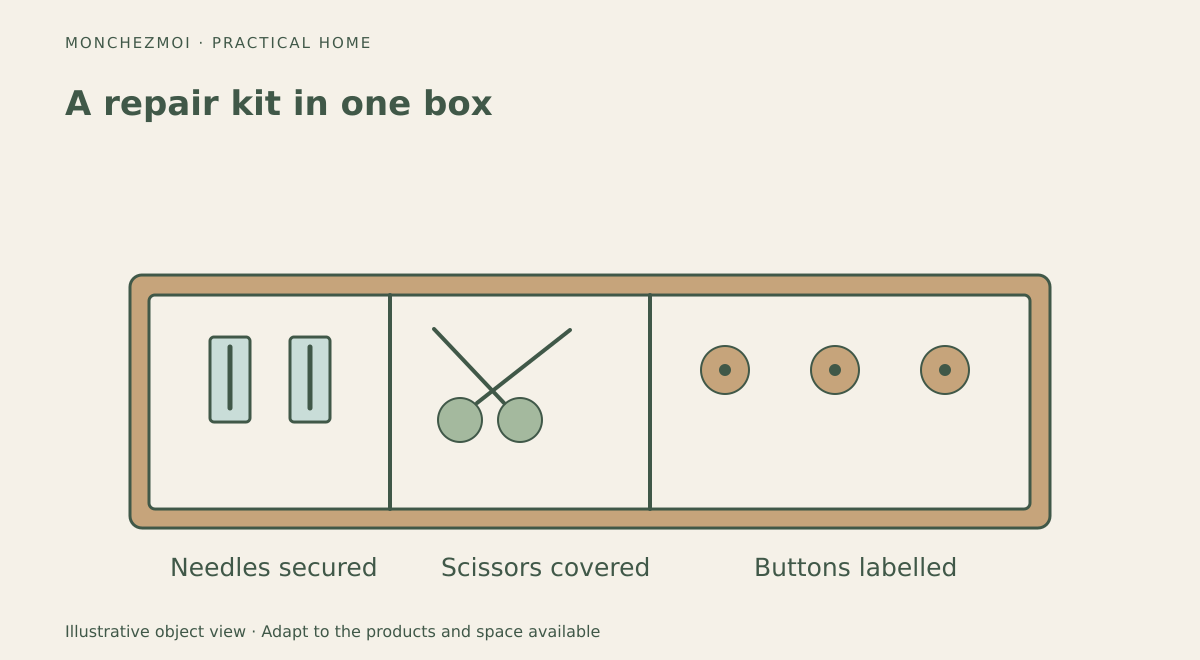
A clothing repair station does not need a sewing machine, a cutting table or a separate room. For routine jobs—reattaching a button, closing a loose seam or repairing a small tear—a portable kit and a temporary work surface are usually more useful than a permanent setup.
Choose the repairs the kit should handle
Start with the clothes actually worn in the household. A practical basic kit contains hand-sewing needles, a few thread colours, small fabric scissors, a seam ripper, a tape measure, a needle threader, a thimble and a few spare buttons. Pins or sewing clips help hold a seam in position. A small piece of compatible repair fabric or patch material can be added for common garments.
Avoid purchasing large assortments before a repair requires them. A kit with a manageable number of tools is easier to check and less likely to accumulate duplicates.
Give every sharp item a secure place
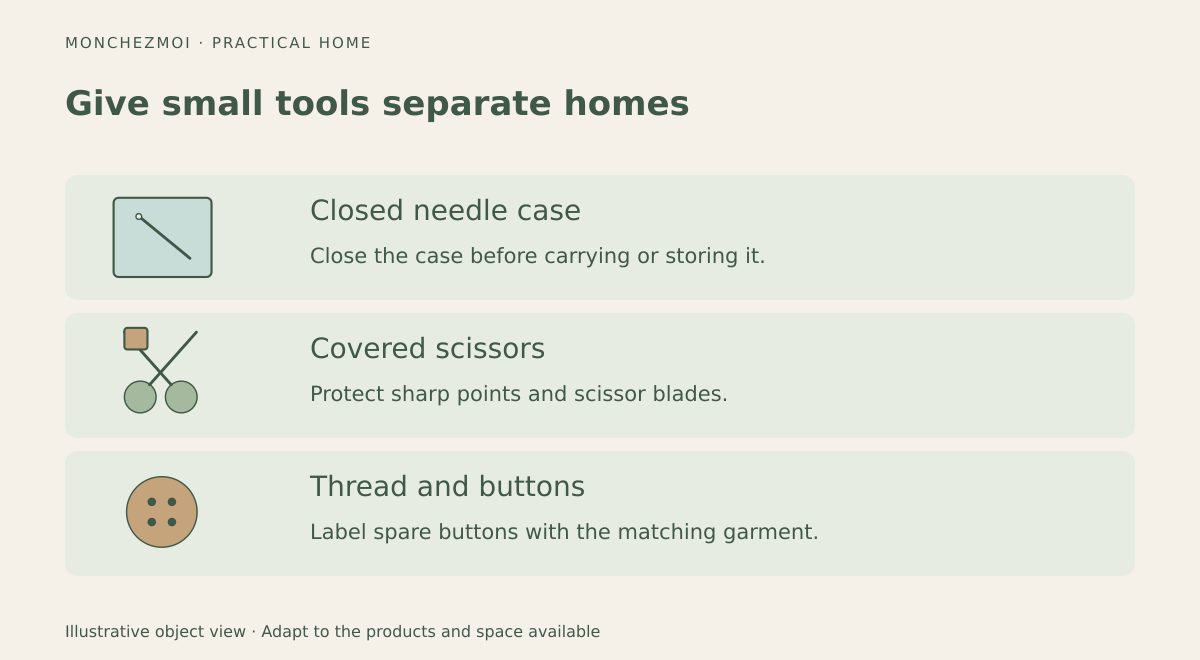
Needles should not be loose at the bottom of a sewing box. Keep them in their original packets, a needle book or a closed needle case. Pins belong in a closed compartment or a secured pincushion; scissors should have a protective cover. A magnetic holder can help gather metal pins, but it should not replace a container that closes securely when the kit is moved or stored.
Store thread spools upright or in separate compartments so loose ends do not tangle. Wind short leftover lengths around small cards only when they are worth saving. Keep replacement buttons in labelled envelopes or tiny boxes, preferably with a note identifying the garment.
Keep the repair queue separate from clothes worn once but not ready for laundry so the next action stays obvious.
Make the station portable
A shallow divided box fits in a dresser drawer; a handled case is better if repairs usually happen at the kitchen table. Choose a container that opens fully so tools are visible without emptying it. A small fabric mat protects the table, provides a place to put needles temporarily and folds away with the kit.
Keep clothes waiting for repair separate
The most overlooked part of a mending station is the queue. Give damaged garments one small basket or a designated shelf, rather than returning them to the wardrobe where the defect will be forgotten. Attach a note such as “replace button” or “repair hem” if the problem is not obvious. Keep the queue small enough that it does not become a second laundry pile.
For items needing specialist work—complex zippers, structural tears or expensive garments—store them separately with the information needed for a tailor or repair service.
Check repairs before the summer-and-winter clothing rotation, rather than rediscovering damaged garments next season.
Adapt the kit to winter clothing
Québec wardrobes often include coats, insulated jackets and other technical outerwear. A detached coat button may be a simple hand-sewing job, but puncturing a waterproof shell or down jacket with a needle can create additional damage. Small holes in some insulated jackets can be repaired with purpose-made adhesive patches, provided the patch is compatible with the fabric and the manufacturer's care instructions. Do not pull feathers or down out of a tear; gently tuck them back before closing it.
Key takeaways
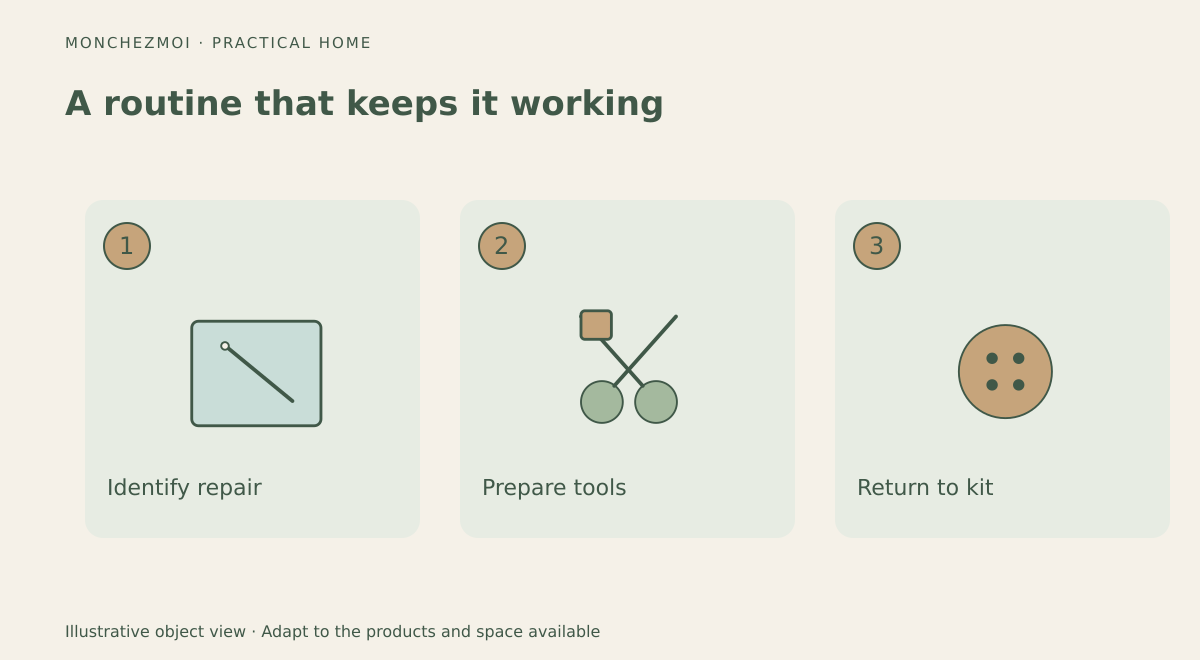
Build the kit around repairs that actually occur, protect needles and scissors in closed compartments and keep one small basket for garments awaiting attention. A portable box makes occasional mending possible without sacrificing permanent living space.