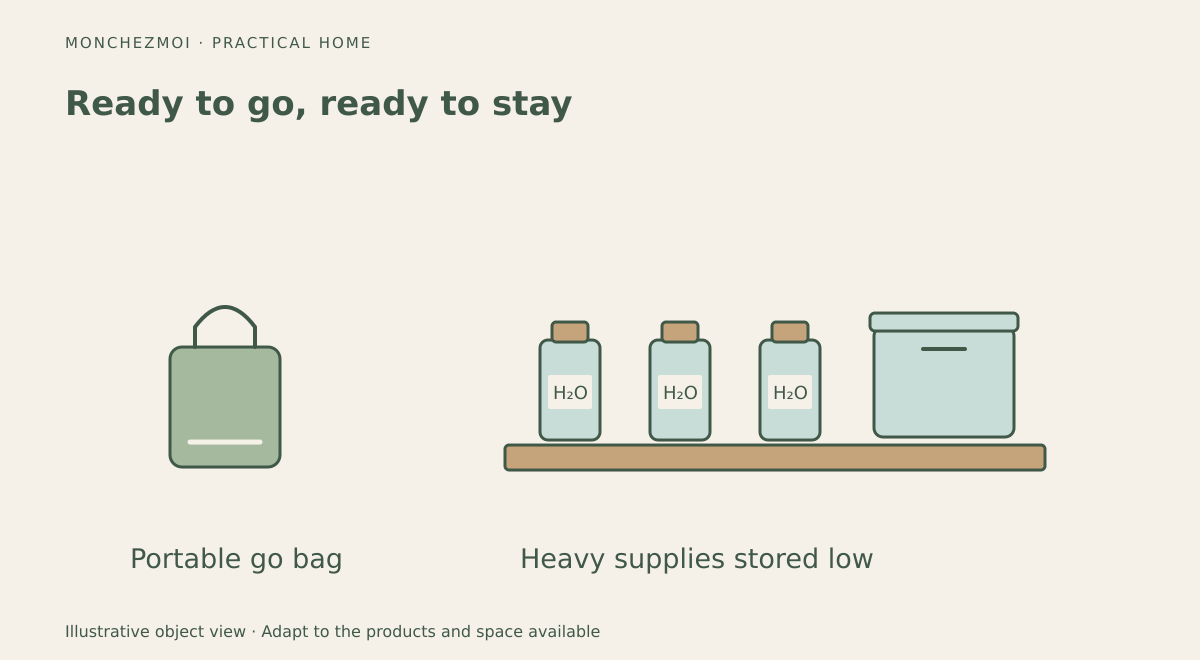
An emergency kit is useful only if you can find it, carry it and trust what is inside. In a small Canadian apartment, that means designing a storage system rather than simply buying a large plastic bin. The best approach separates the supplies you might need to grab quickly from the heavier items you would use while staying at home.
Start with a 72-hour plan
Canada's emergency preparedness guidance recommends being ready to manage for at least 72 hours. Start with water, shelf-stable food, a manual can opener, flashlights, a battery-powered or hand-crank radio, first-aid supplies, essential medication, sanitation items and charging options. Include needs specific to children, pets or household members who rely on medical equipment.
For water, federal guidance uses at least two litres per person per day for drinking, plus another two litres per person per day for cooking and cleaning. For two people over three days, that is 12 litres for drinking or 24 litres when including the additional allowance. Those quantities are bulky: plan the storage location before buying containers. Check local emergency guidance, too, because circumstances can call for additional supplies.
Build two separate kits
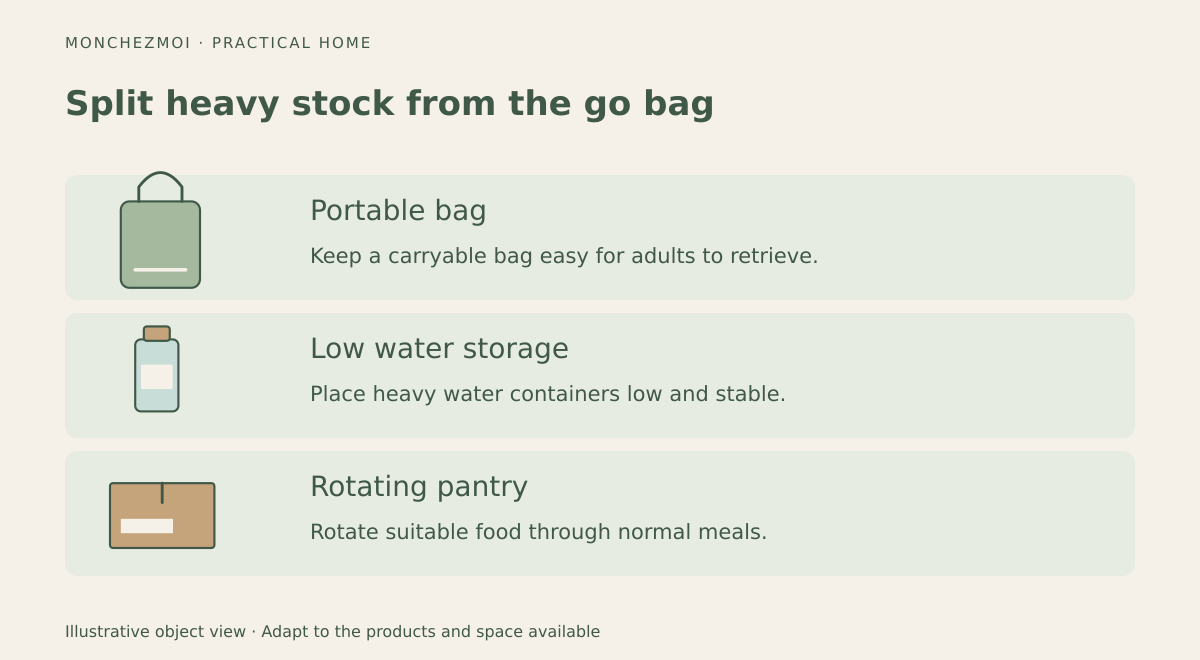
Keep a portable evacuation bag in an accessible closet near your usual exit. It can contain copies of key information, a flashlight, a compact first-aid kit, charging cables and other essentials that are safe to store there. Keep original documents secure and consider a waterproof pouch for copies.
Store the heavier shelter-in-place supplies elsewhere: water on a stable low shelf, canned food in the pantry and sanitation items in a labelled bin. Do not place heavy water containers on flimsy upper shelves. Everyone in the household should know where both sets are kept.
For the food reserve, use the accessible zones described in our guide to organizing provisions without a pantry.
Use a small-space layout
Clear bins can make contents easy to see, but opaque containers with large labels are equally practical. Labels should state the contents and the date last checked. A simple phone note or spreadsheet can list where items are stored without requiring every supply to occupy the same cupboard.
Rotate without wasting supplies
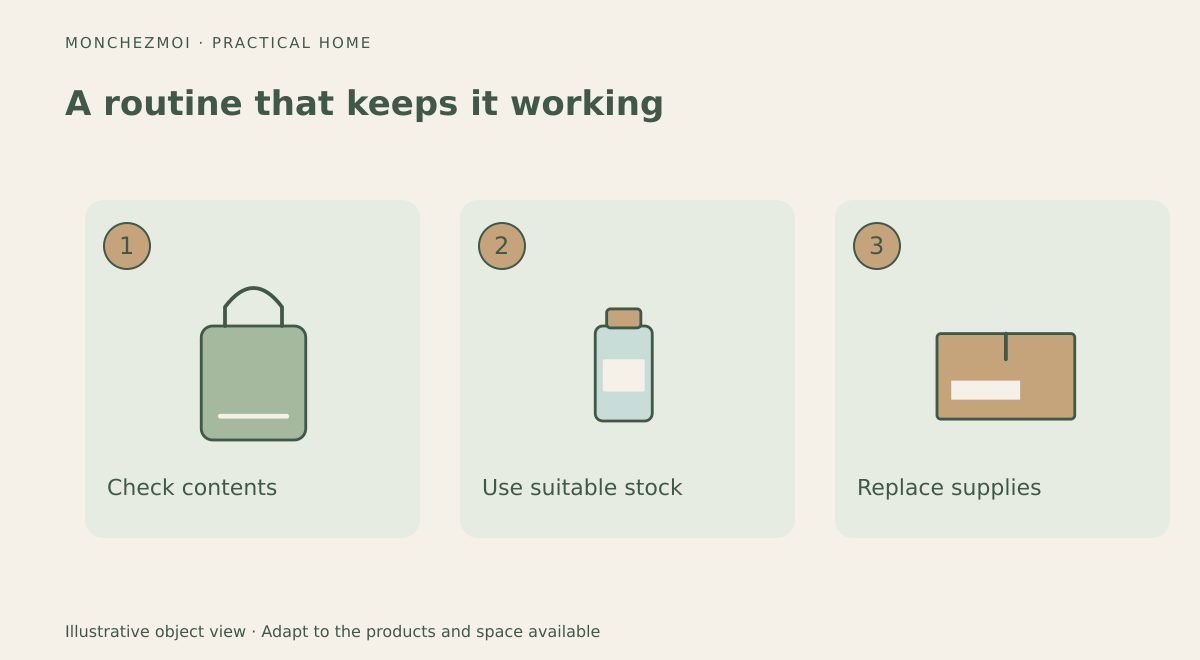
Use the oldest suitable pantry food first and replace it during normal grocery shopping. Follow packaged water and food storage instructions rather than assuming one replacement interval applies to everything. Check batteries for expiration dates, leakage and device compatibility. Recharge power banks according to their instructions, and test flashlights and radios during scheduled inspections.
A twice-yearly inspection is a manageable starting routine. Check expiry dates, packaging damage, seasonal clothing, medication needs and whether your household size has changed. Put the next review date on the container or in a calendar.
Use the same clear naming scheme as our guide to visual storage labels so everyone can identify the right compartment.
Mistakes to avoid
Do not rely on one power bank for a prolonged outage, bury the evacuation bag behind seasonal decorations or store everything in a location that might become inaccessible during a flood. Emergency supplies should be organized for the emergency you are likely to face, not for a photograph of a perfectly arranged closet.
A compact system succeeds when it is accessible, divided by purpose and easy to maintain. Even a small apartment can support meaningful preparedness without surrendering an entire room.