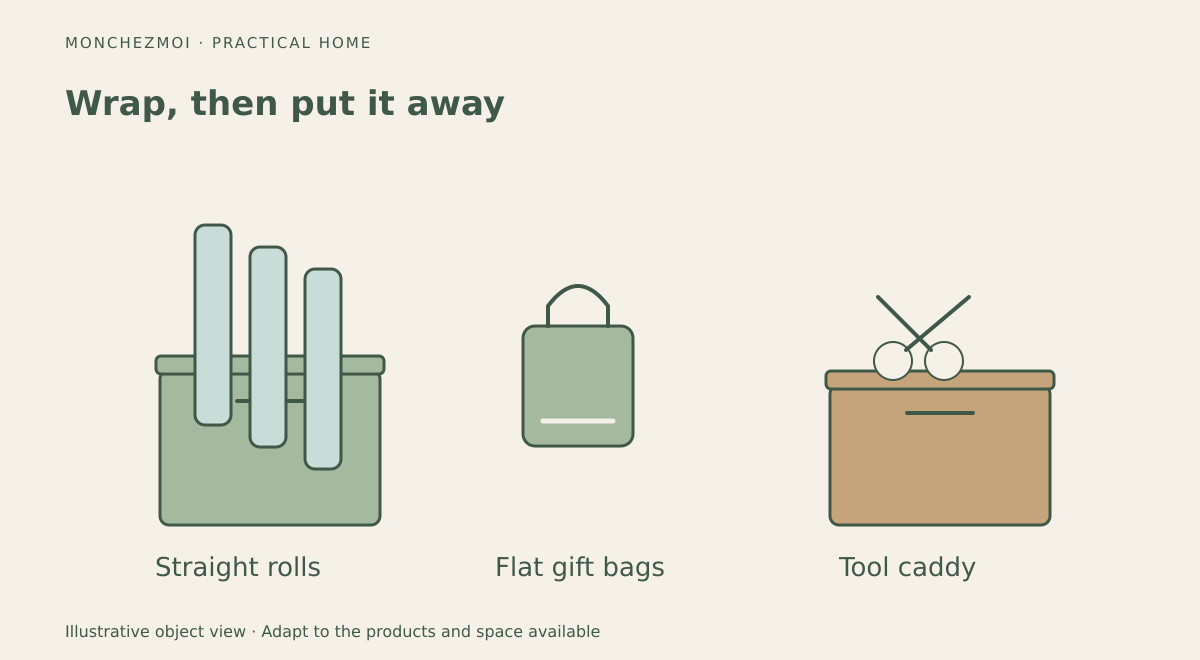
Gift wrapping is easier when the supplies are stored as a working kit rather than scattered across closets. In a small apartment, the most practical arrangement is usually two-part: a protected place for long rolls and flat bags, plus a portable container holding the tools used every time a gift is wrapped.
Start with the space you already have
Before buying an organizer, lay out the longest roll of wrapping paper, the largest gift bag and the tools that need to fit. Measure the available space under the bed, inside a closet or behind a door. A storage box advertised for gift wrap is not necessarily long enough for every roll, and a deep box may be awkward to retrieve from a low bed.
A narrow closet can accommodate rolls standing upright in a tall basket. Under-bed storage works better with a long, shallow lidded container that keeps dust off the paper. An over-the-door organizer can hold small accessories, but check that it clears the door frame and does not prevent the door from closing. Avoid hanging heavy bins on lightweight doors.
Keep rolls straight and paper dry
Wrapping paper creases easily. Store rolls without folding them and keep them away from damp walls, leaking windows and humid basement floors. A loose elastic band or paper sleeve can stop a roll from unravelling; a tight band may leave a dent. Keep loose sheets flat in a portfolio or a suitably sized folder rather than folding them to fit a drawer.
If a household uses only a few rolls each year, there is little reason to dedicate an entire cabinet to them. A single container that can be lifted out for birthdays and holidays may be enough.
Keep supplies separate from meaningful keepsakes; our guide to turning sentimental items into useful heirlooms addresses that different collection.
Separate supplies by how they are used
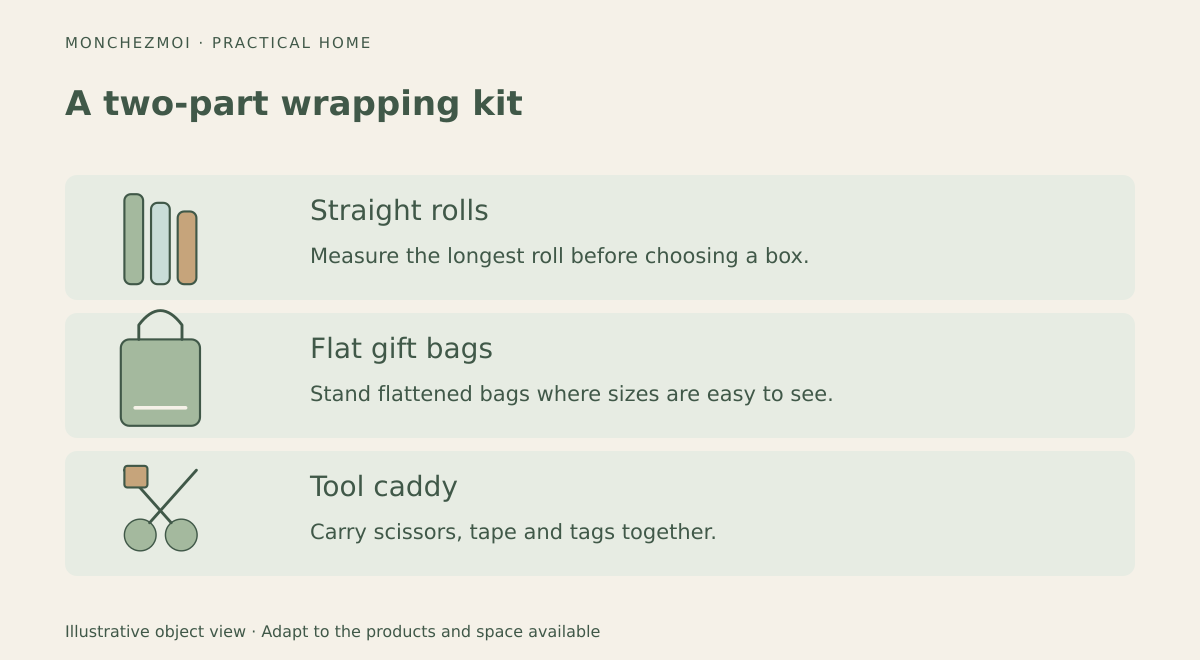
Gift bags are easiest to browse when stored upright by approximate size. Flatten tissue paper gently and keep it in a separate folder. Ribbons on spools can stand in a shallow bin; loose lengths can be wound around pieces of cardboard to prevent tangles. Keep blank greeting cards separate from cards received as keepsakes: one collection is a supply, the other is an archive.
Build a five-minute wrapping routine
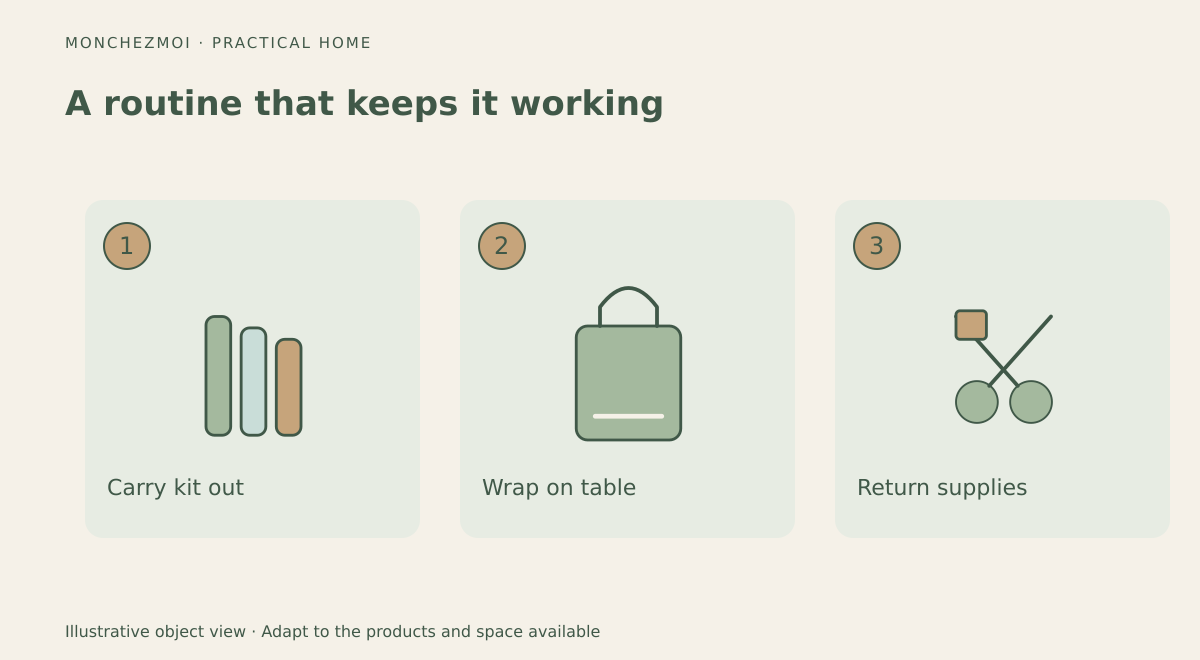
A permanent crafting desk is unnecessary. Choose a clear table, carry over the tool caddy and retrieve one roll or bag. After wrapping, return unused paper to its sleeve, wind up ribbons and put everything back in its assigned location. The system works when putting supplies away takes no more effort than getting them out.
For seasonal collections, keep everyday supplies accessible and place Christmas-specific paper and decorations in a labelled seasonal container. This prevents a December-sized collection from taking over a frequently used drawer throughout the year.
This is an example of storing supplies by activity and point of use: keep the working kit near the task and the reserve elsewhere.
Avoid collecting packaging without a purpose
Reusable bags and ribbons are worth keeping when they are clean, intact and likely to be used. Torn bags, crushed bows and scraps too small for a planned project create bulk without improving future wrapping. Set a physical limit—one bag holder and one ribbon box, for example—and sort the collection when either fills up.
Key takeaways
Store long rolls without bending them, keep paper away from moisture and group frequently used tools in one portable kit. The best gift-wrapping station is not a dedicated room: it is a system that can be set up and cleared away quickly.