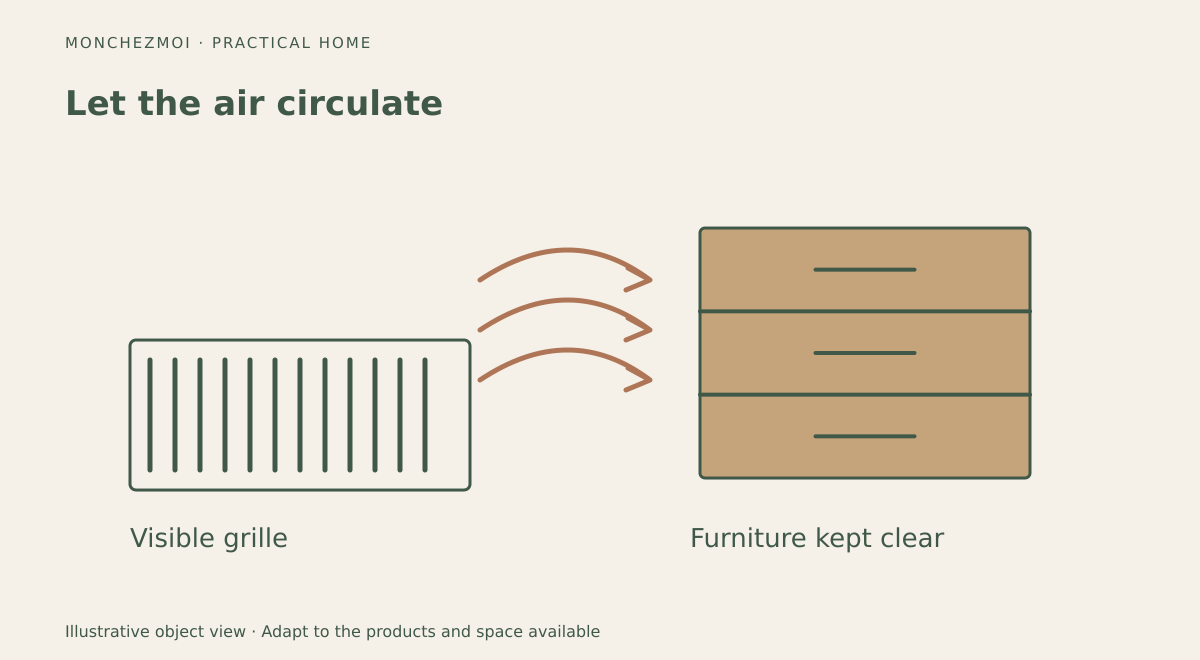
In a compact home, furniture often ends up against every available wall. That can make rooms feel efficient while unintentionally blocking heating registers, return grilles or airflow along cold exterior surfaces. Improving circulation does not require an empty room, but it does require knowing where air is supposed to move.
Map the airflow paths
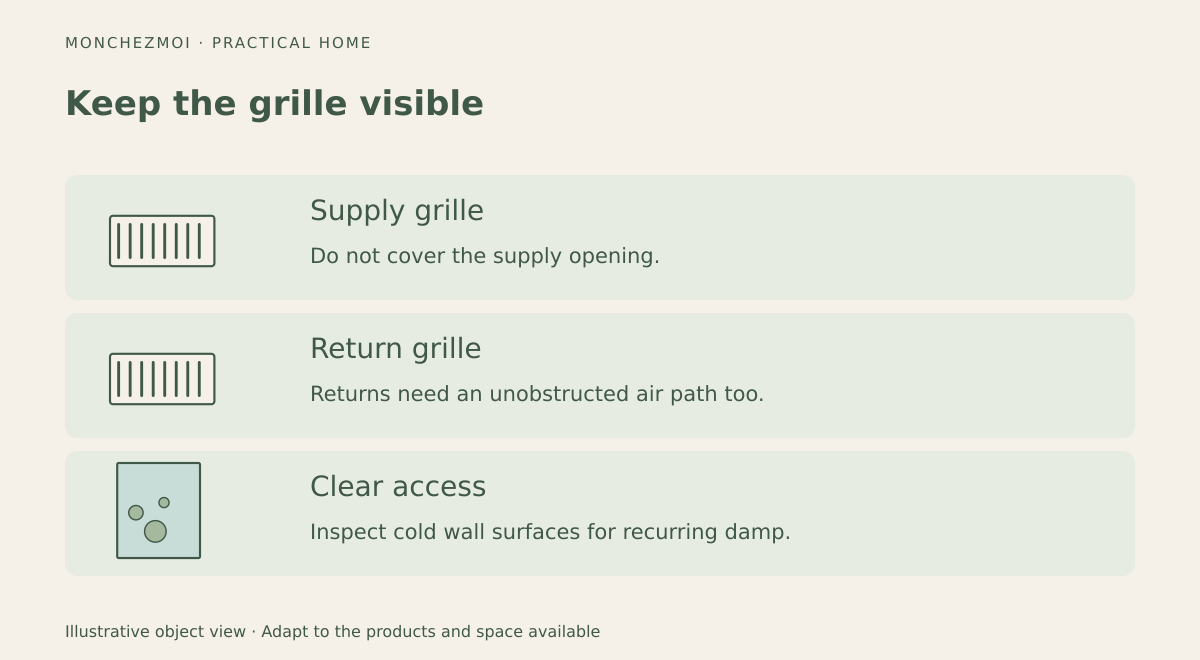
Start by identifying forced-air supply registers, return grilles and ventilation openings. This article focuses on circulation and damp exterior-wall surfaces; heater-specific clearance planning is a separate task. A supply delivers conditioned air; a return helps air circulate back through the system. Covering either can interfere with its intended function. Do not assume a grille is decorative or safe to conceal behind a cabinet.
Observe where doors swing and where large furniture sits. A bed over a floor register, a bookcase against a return grille or a sofa pressed into a heating unit can all create problems for different reasons.
Keep registers and returns open
Move furniture away from grilles and keep rugs, baskets and storage boxes off openings. If an unavoidable layout conflict remains, ask a qualified HVAC professional about appropriate solutions. Do not improvise sealed duct extensions or permanently close vents to make furniture fit.
For the wider winter comfort check, see our guide to keeping a rented apartment warmer.
Pay attention to exterior walls in winter
Canadian winters can make exterior walls and corners colder than the surrounding room air. Large wardrobes or sofas pushed tightly against those surfaces may reduce local air movement. When warm, moist indoor air encounters sufficiently cold surfaces, condensation can occur. Over time, persistent moisture can contribute to mould.
Improve circulation without creating clutter
Use furniture with open legs where appropriate, avoid blocking doorways used for air transfer and keep ventilation equipment maintained. A small room fan can help mix indoor air, but it does not bring in fresh outdoor air or solve a hidden leak. If the room remains stuffy, review the ventilation system rather than relying entirely on a fan.
If cold air still enters around the glazing, investigate renter-friendly ways to address window drafts separately.
Manage moisture, not just furniture
Health Canada advises addressing moisture sources and generally maintaining indoor relative humidity around 30–50%. In very cold weather, a lower level may be needed to prevent condensation on cold windows and surfaces. Use bathroom and kitchen exhaust ventilation as appropriate, and respond promptly to leaks.
Watch for recurring window condensation, damp patches behind cabinets and persistent musty smells. These signs deserve investigation even if moving furniture temporarily improves the appearance of the wall.
A quick room inspection
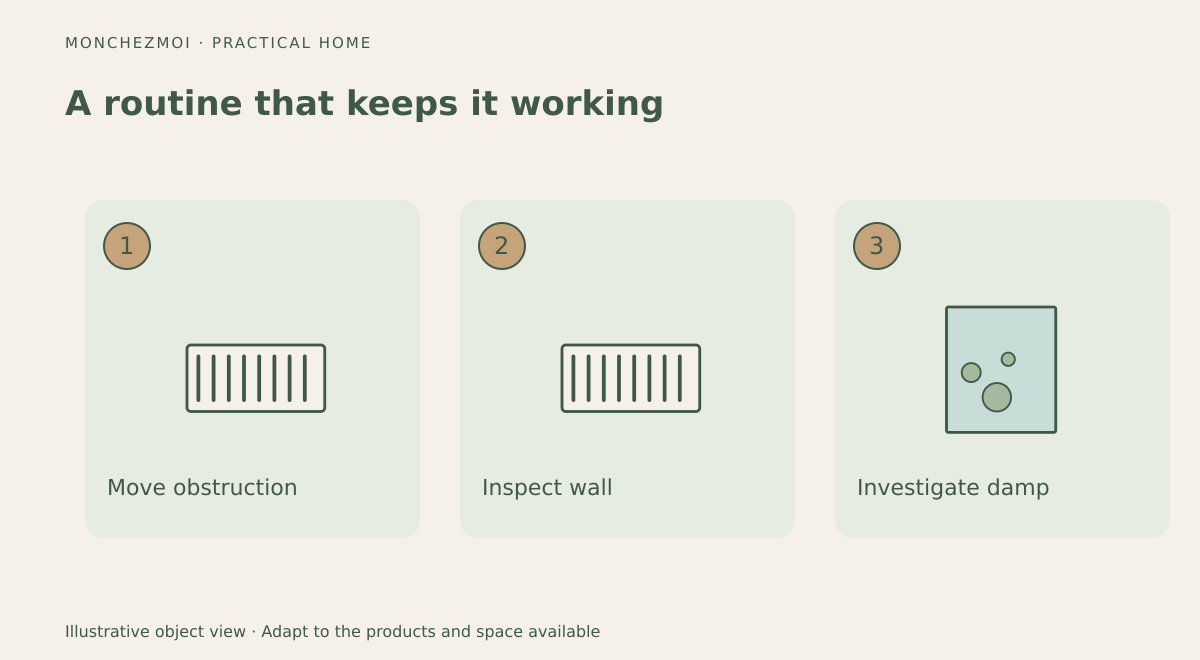
Walk through the home and check every grille, heater and exterior-wall furniture arrangement. Move items that clearly block openings, inspect concealed wall surfaces and note rooms with uneven temperatures. If a heater has required clearances, follow its specific manual; that topic is distinct from general room circulation.
The lasting improvement
Good airflow comes from keeping the building's intended paths open and controlling moisture. Furniture rearrangement can help, but it is not a substitute for repairing defective ventilation, insulation or water-damaged building materials.