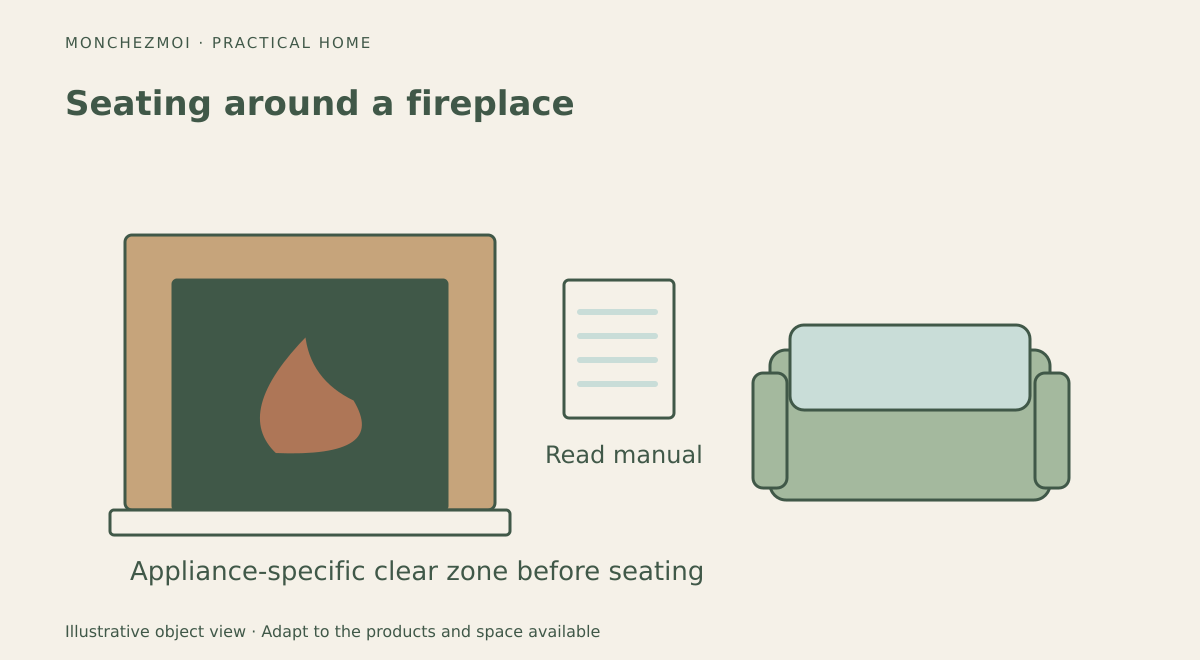
A fireplace naturally attracts attention, but it should not dictate every piece of furniture in the room. A successful layout makes the seating comfortable, keeps circulation clear and respects the heat and clearance requirements of the specific fireplace. Those requirements come before any decorating rule about symmetry or focal points.
Identify the fireplace before moving furniture
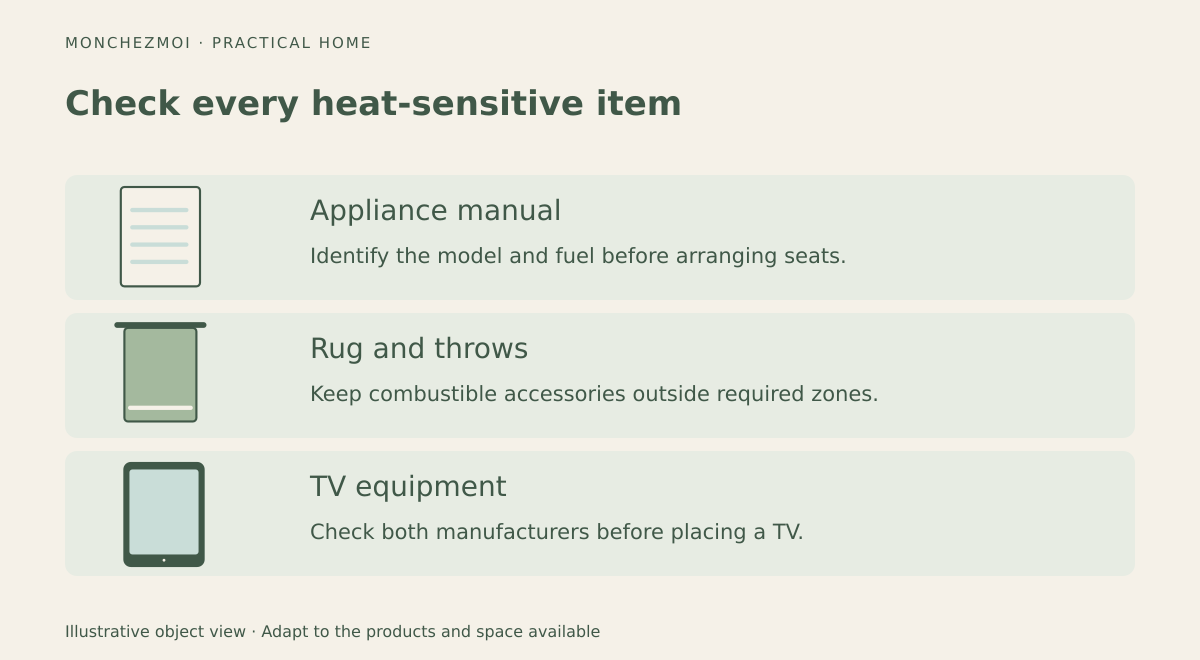
Wood-burning fireplaces, wood stoves, gas fireplaces and electric units do not have interchangeable safety requirements. The appliance's certification label and installation manual may specify clearances to combustible materials, hearth protection, ventilation and restrictions on surrounding construction. A decorative fireplace that is permanently out of service presents a different planning problem from one that is actively used.
Establish the safe zone first
Mark the manufacturer's required clearances before testing sofa positions. Think beyond the sofa: rugs, baskets of firewood, curtains, throws, side tables and television equipment may also be combustible or heat-sensitive. Keep the hearth and any required protective area unobstructed. For an open wood fire, account for sparks and embers, not only radiant warmth.
In a larger room, these principles also help define separate areas in an open-plan space.
Build a conversation area, not a showroom display
Once the safe area is established, place the main sofa where people can comfortably see and talk to one another. Two smaller chairs opposite or at an angle can create a welcoming arrangement without forcing every seat to face the fire. A lightweight ottoman can be more flexible than an oversized coffee table, provided it stays outside required clearances.
Leave an obvious route between doors, windows and frequently used furniture. Walk the path before finalizing the layout: a room can look balanced in a floor plan while feeling awkward when someone carries a laundry basket through it.
Try these layouts in a small living room
Fireplace on the main wall: place the sofa opposite, then add one or two compact chairs angled inward. If space is tight, use a narrow side table instead of a large central coffee table.
Corner fireplace: orient the main seating toward the room's practical centre rather than twisting every chair toward the corner. The fireplace can remain a secondary focal point.
Narrow living room: keep the longest wall available for circulation or the sofa, and use shallow seating. Avoid positioning bulky armchairs where they pinch the walkway near the hearth.
Open-plan space: use the back of a sofa or a rug to define the sitting area, but verify that rug placement respects fireplace and hearth requirements. Keep a route through the room that does not cut directly in front of the fire.
Test movable pieces before committing, as in our guide to arranging familiar furniture in a new rental.
When the fireplace and television compete
A television above a fireplace may be visually tidy but can create two problems: uncomfortable viewing height and excess heat. The television and fireplace manufacturers' instructions should both be checked. A mantel or heat deflector is not proof that every television can be installed safely above every unit.
Where possible, consider a television on an adjacent wall or a movable seating arrangement that accommodates both activities. This can reduce neck strain and keep electronics away from the hottest part of the room.
Protect furniture from heat and everyday wear
Leather, upholstery, timber finishes and electronics can all be affected by sustained heat. Even when a furniture position appears to satisfy a basic clearance, monitor whether nearby surfaces become excessively warm during normal fireplace use. Do not place blankets, cushions or magazines in a required safety zone simply because they are easy to move later.
Arrange lamps and side tables so cords do not run across the hearth or walking paths. Keep fireplace tools secure and accessible to adults without putting them where children will play.
When replacing seating, compare sofa fabrics and their care needs as well as the furniture dimensions.
Make safety part of the room's routine
Have the fireplace and chimney inspected and maintained as appropriate for the appliance and fuel. Follow manufacturer directions for screens, doors and ventilation. Never leave an active fire unattended in circumstances the equipment instructions prohibit, and keep smoke and carbon monoxide alarms installed and maintained according to applicable requirements.
Reassess the layout after introducing a larger sofa, new rug or holiday decorations. A safe arrangement can become crowded over time.
Key takeaways
Start with the fireplace's actual clearance and installation requirements, then arrange furniture for conversation and movement. Small rooms benefit from compact, flexible seating; television placement and decorative accessories should never override heat safety.