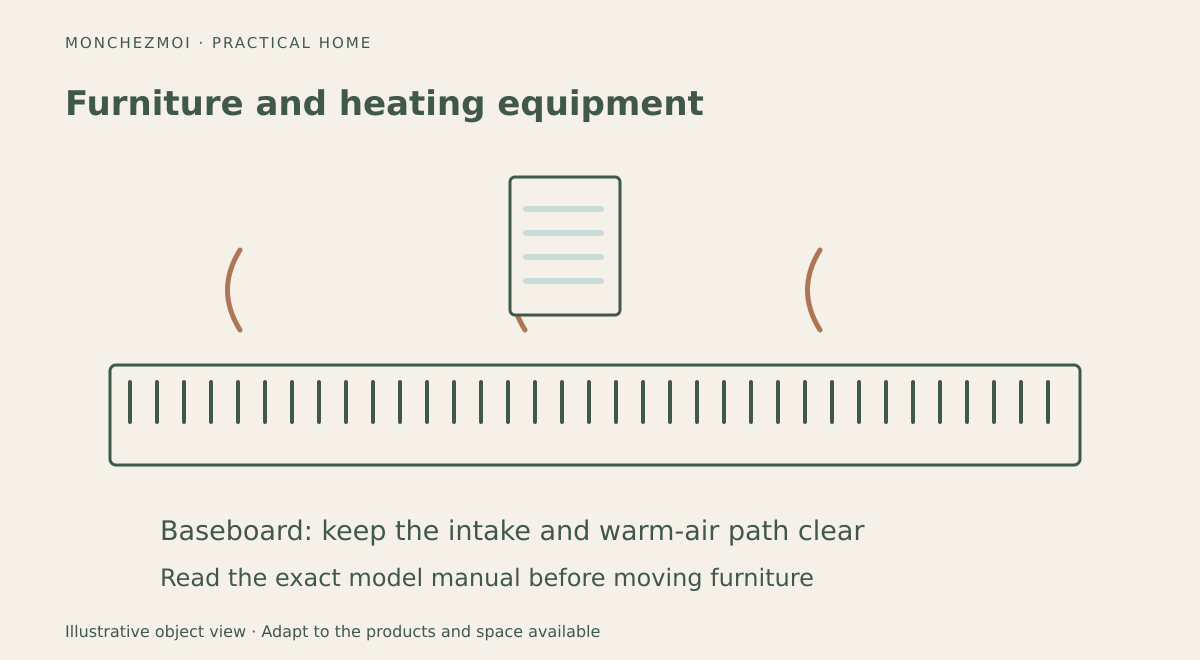
A sofa can fit perfectly against a wall and still be in the wrong place. In many Canadian homes, floor registers and baseboard heaters depend on open space to deliver warmth safely and effectively. The first step is identifying the equipment, because a forced-air vent and an electric baseboard heater are not governed by the same rules.
Identify what is heating the room
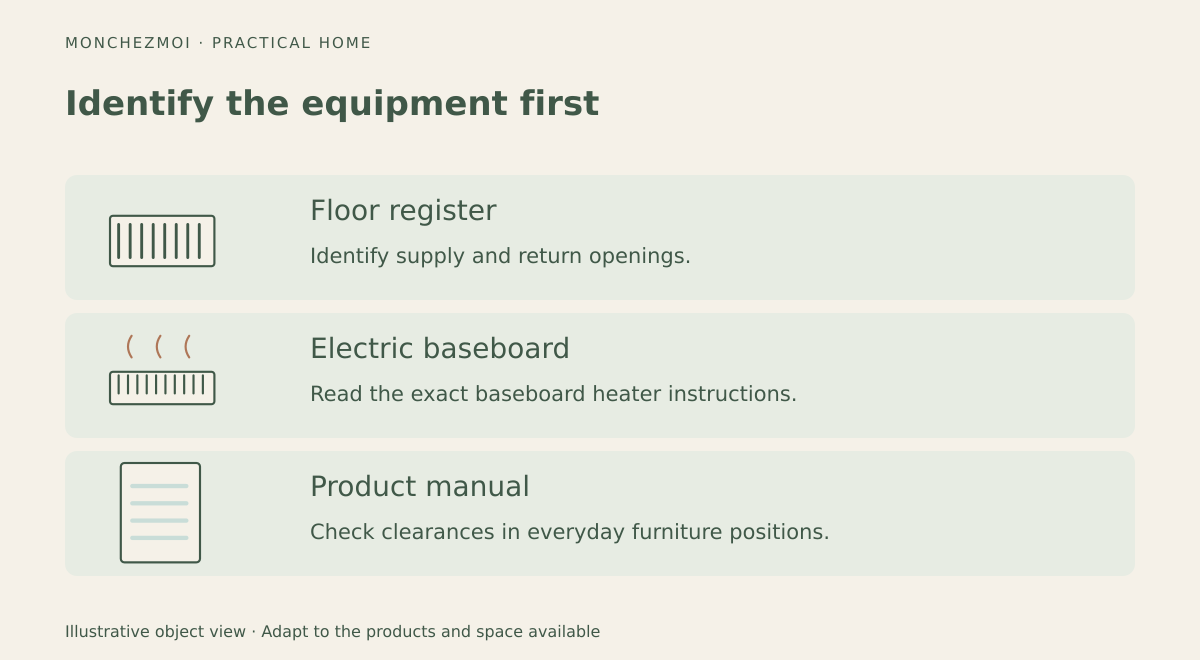
A floor supply register delivers air from a forced-air system. A return grille draws room air back toward the system. Electric baseboard heaters generate heat at the unit and typically rely on convection. Hydronic baseboards circulate heated water through an element and also depend on airflow around the enclosure.
Make a quick sketch showing all registers, returns, baseboards, windows, doors and electrical outlets before moving furniture. Check whether a grille is supplying or returning air; neither should be treated as spare floor space.
Electric baseboards: follow the exact manual
Locate the model number and installation instructions. Keep curtains, bedding, boxes and other combustibles outside the specified zones. Do not place a storage bench or bed skirt where it blocks the heater's lower air intake or upper warm-air path.
A window-side bed needs an additional check for hanging bedding, explained in our bed-under-a-window layout guide.
Hydronic baseboards need breathing room, too
Hydronic units may have different safety characteristics, but they still need a clear path for convection. A floor-length sofa directly against the enclosure can reduce heat delivery. Avoid assuming that a water-based system can be covered or boxed in without consequences. Consult its installation guidance before adding furniture or decorative covers.
Arrange furniture around floor registers
Never put a rug, cabinet or sofa leg over a register opening. A register partly hidden beneath furniture may send warm air into the furniture rather than the occupied room. Start with the largest items—bed, sofa, dresser—then place smaller pieces where they do not obstruct the intended air path.
If a small room has only one practical furniture layout, a heating professional can assess whether a manufacturer-approved deflector or a system change is appropriate. Avoid improvised duct extensions and covers that could restrict airflow or create other hazards.
For the wider winter comfort check, see our guide to keeping a rented apartment warmer.
Practical room-by-room choices
In a bedroom, check the bed frame, hanging bedding and nightstands. In a living room, measure the sofa's depth and leg height rather than only the wall length. In a dining area, remember that chairs move: a heater clearance must remain clear when people sit down or push chairs back.
The rule that matters
Treat equipment manuals as the authority for clearances. The goal is not to maximize the number of centimetres between every object and every wall, but to preserve the safe, intended airflow around the particular heating system installed in your home.