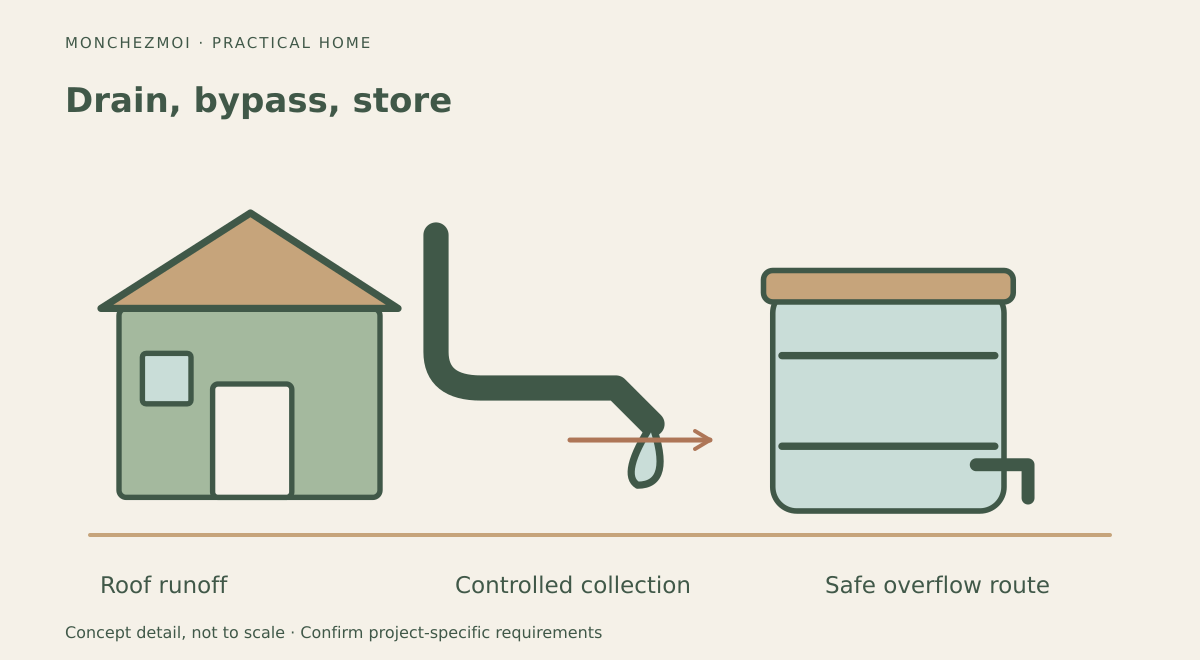
The most reliable winter protection for an ordinary seasonal rain barrel is to empty it before freezing temperatures arrive and prevent it from filling again. Water trapped in a tap, fitting or hose can freeze even when the main container looks almost empty.
Do not wait for a hard freeze
Plan shutdown when overnight temperatures begin approaching freezing. A thin hose or exposed valve can freeze faster than a large volume of water. The Government of Canada specifically advises emptying rain barrels before temperatures fall below freezing to reduce the risk of bursting.
A tank designed and installed for year-round use may have different requirements. Follow its manufacturer's cold-weather instructions rather than applying ordinary rain-barrel advice to every cistern.
Empty the barrel and its fittings
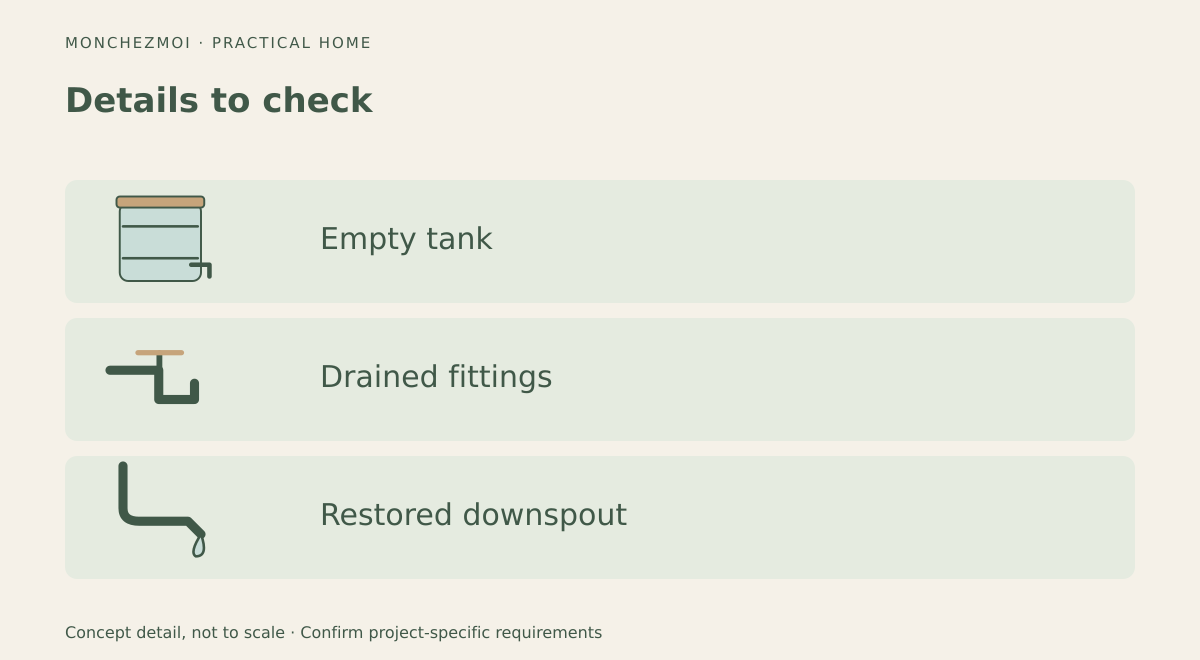
Disconnect watering hoses and use the stored water on suitable plants if conditions allow. Open the barrel's drain or tap, then remove remaining water according to the product instructions. Pay attention to low pockets, threaded connectors, elbows and linked-barrel hoses where water can remain trapped.
For the related planning task, use our guide to Rainwater Collection for Garden Irrigation in Canada: Planning Guide.
Clean before storage
Remove leaves and sediment from the bottom. Wash the interior with a cleaning method compatible with the tank material, then rinse and allow it to dry. Inspect the screen, lid, seals and spigot for wear. Avoid mixing cleaning chemicals or using products not recommended for the container.
A clean, dry tank is easier to inspect in spring and less likely to develop persistent odours while stored.
Restore the downspout's winter route
This step matters as much as draining the barrel. Once the diverter is switched to bypass mode or the barrel is removed, roof runoff and snowmelt still need somewhere to go. Refit the downspout or winter bypass and check that discharge is directed away from the foundation, walkways and neighbouring lots.
Do not leave a cut downspout emptying against the wall. Local rules may govern discharge locations, particularly in municipalities such as Montréal.
For the related planning task, use our guide to Prevent Soil Erosion Around Downspouts: Practical Drainage Fixes.
Store the container according to its design
A garage or shed protects a lightweight barrel from wind and ultraviolet exposure, but heated storage is not always necessary. Some empty barrels can remain outdoors if the manufacturer permits it. Secure them against tipping and ensure the opening cannot collect rain or snow.
Do not forget irrigation equipment
Seasonal drip lines, filters, timers, pressure regulators and pumps can retain water. Remove battery-operated controllers where the manufacturer recommends it. Drain or professionally winterize irrigation piping according to its design; compressed-air blowouts can damage equipment or cause injury if performed at the wrong pressure.
Spring restart checklist
Before reconnecting, inspect the base for movement, examine the barrel for cracks and test fittings for leaks. Clean inlet screens and confirm that overflow piping is open. After the first rainfall, check both the barrel connections and the ground around the discharge point.
Key takeaways
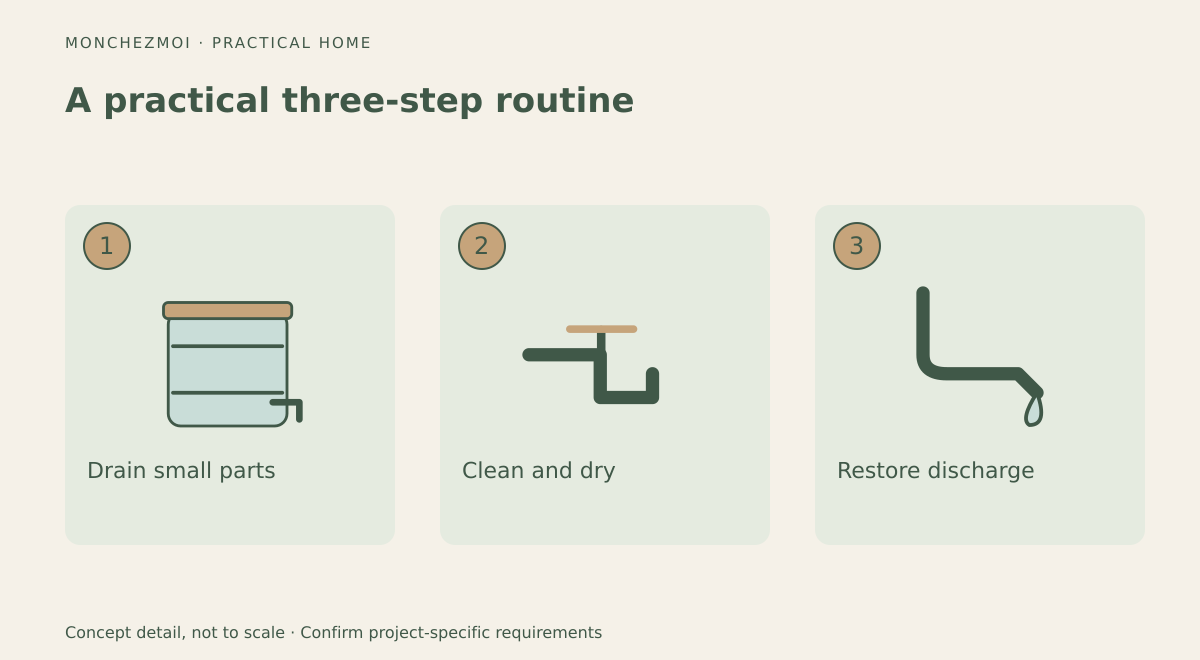
Drain the barrel and its small fittings, switch the downspout to a safe winter route and follow manufacturer instructions for pumps and large tanks. A dry container alone is not enough if the overflow or irrigation lines still hold water.