A shared bathroom is often less a storage problem than a timing problem. When several people need the sink, shower and mirror at similar hours, even a tidy room can become stressful. The solution is to organize both the objects in the bathroom and the activities that take place there.
Find the real bottleneck
For a few mornings, notice which activities create waiting. Is the shower occupied while someone needs the sink? Does one person spend ten minutes searching for cosmetics? Are towels and hair tools scattered across the counter? Fixing the biggest bottleneck first usually works better than buying organizers for every drawer.
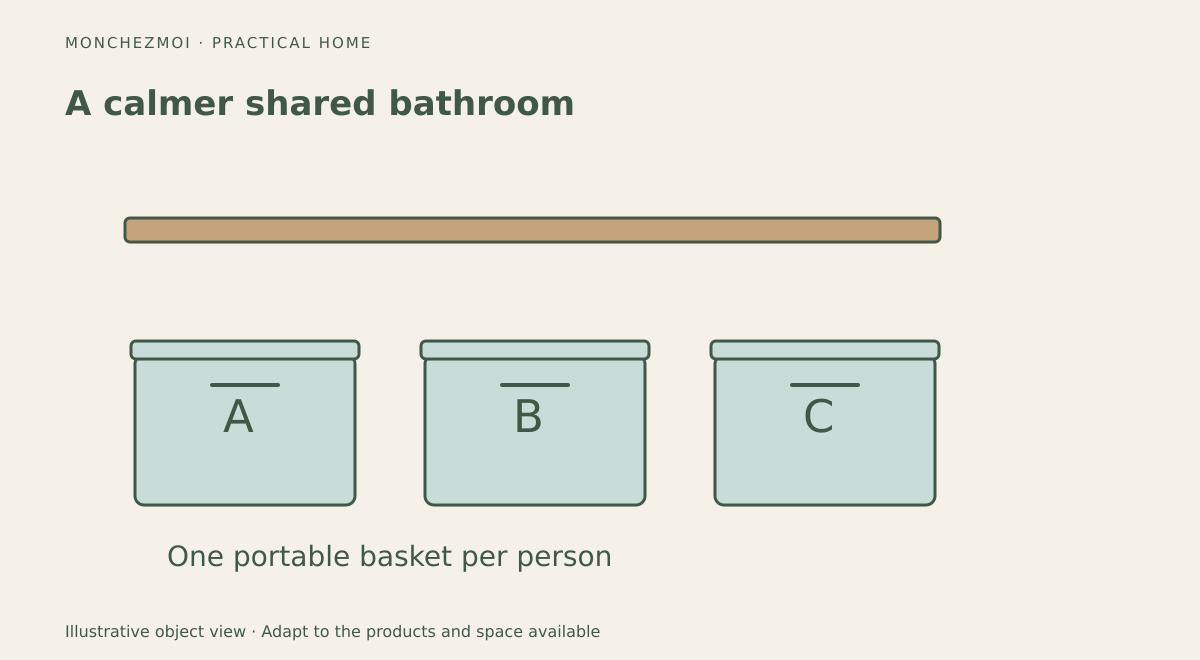
Assign personal storage
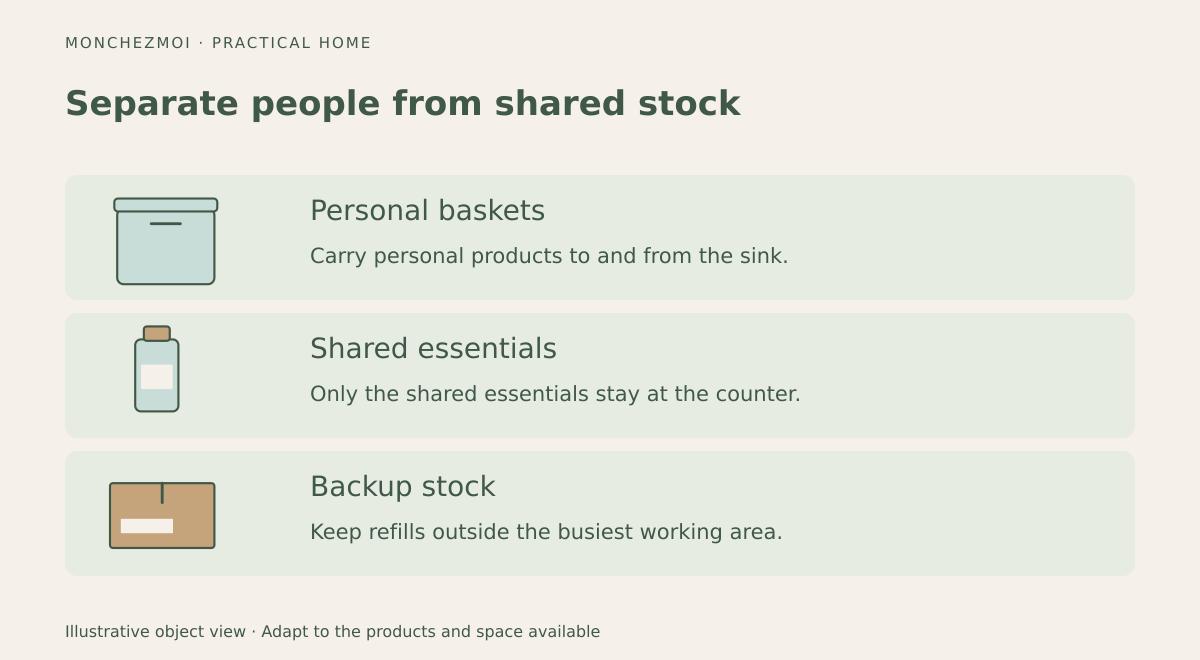
Reserve a separate area for shared products such as hand soap and spare toilet paper. Keeping backup stock away from the main counter makes the room feel less crowded.
When visitors arrive, adapt the arrangement with our shared-bathroom guest preparation guide.
Move portable routines elsewhere
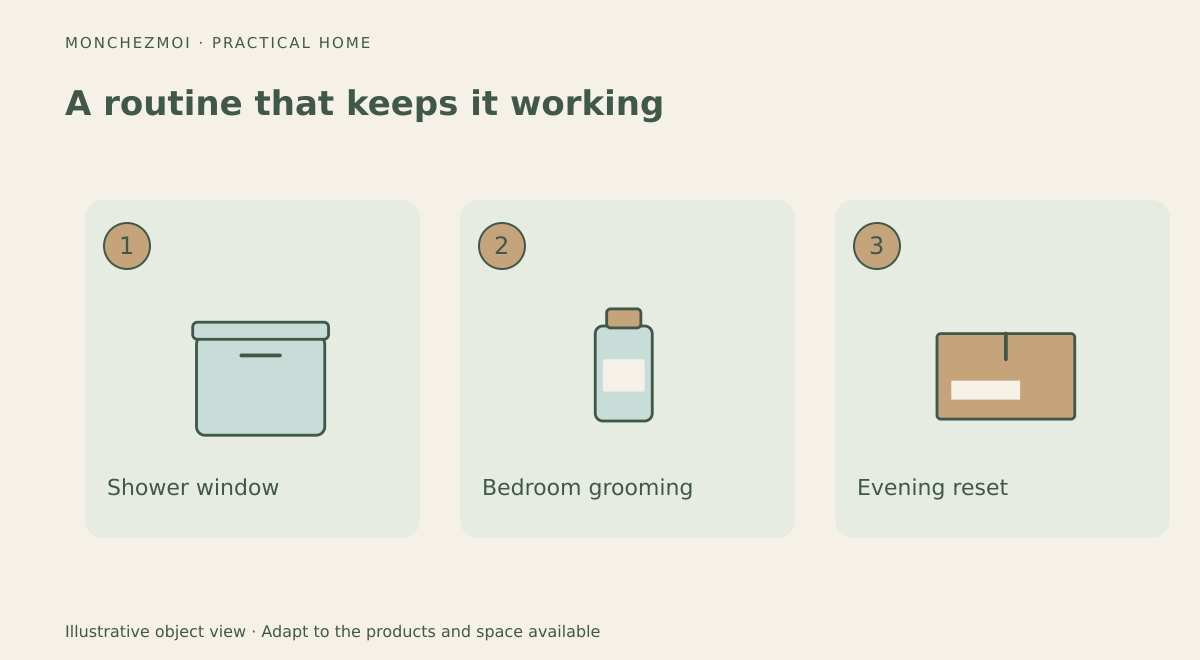
Not every part of getting ready requires a bathroom. Hair brushing, choosing accessories, applying some skincare products and getting dressed can often happen in a bedroom. Create a small grooming basket or mirror station elsewhere if that is practical. Use electrical styling tools only in appropriate, safe locations and according to their instructions.
This change can free the sink and mirror without changing anyone's wake-up time.
Plan around different schedules
If one adult leaves early and another works later, give the early departure priority for tasks that require exclusive bathroom access. Families with overlapping departures can agree on approximate shower windows while leaving room for unexpected needs. The point is coordination, not a rigid timetable that causes more arguments than it solves.
An evening reset helps: return products to assigned bins, put out clean towels and move tomorrow's clothing out of the bathroom. This reduces morning searching and prevents the counter from becoming temporary storage.
For the hardware, compare bathroom storage options that avoid drilling while checking stability and load limits.
Use renter-friendly storage carefully
Over-door racks, drawer dividers, freestanding shelves and removable organizers can add space without drilling. Confirm that adhesive products are suitable for humid rooms and the surface finish. Keep shelves stable and avoid mounting heavy items above the toilet or where they might fall.
Example: one bathroom, four people
Suppose two adults and two school-age children share one sink and one shower. Each person has a small personal basket. The shower schedule is coordinated around departure times. Hair brushing and dressing happen in bedrooms. A shared shelf holds hand soap and toilet paper, while backup products live in a hall closet.
This arrangement does not create extra square footage. It reduces how long each person needs the limited space.
Keep the system adaptable
Review the routine when school or work schedules change. The best shared bathroom is not one with perfectly matched containers; it is one where people can find what they need and finish their routines without unnecessarily blocking one another.