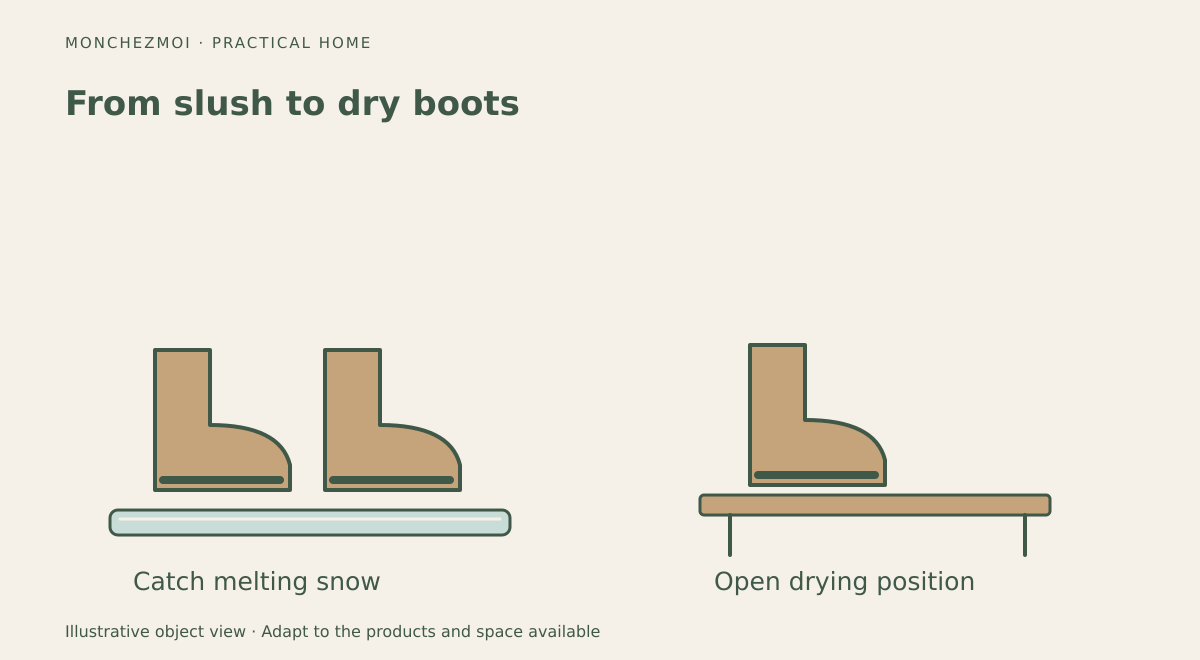
Winter boots arrive home carrying snow, salt, grit and water. Without a deliberate drying area, the entryway becomes a puddle, the floor stays damp and boots may still be wet the next morning. This guide covers the wet-to-dry process rather than the choice of a permanent shoe cabinet. You do not need a full mudroom to fix this; a compact two-stage station can work beside an apartment door.
Separate dripping from drying
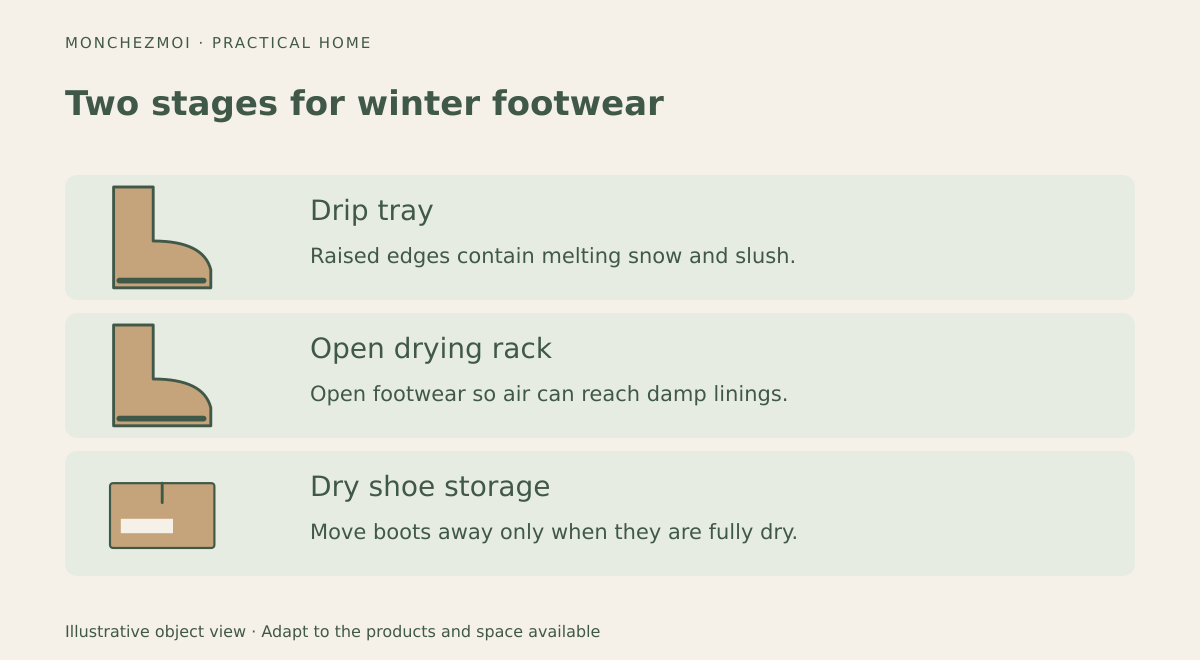
Start with a waterproof boot tray with raised edges. It catches melting snow and keeps salty water from spreading across the floor. A removable grid can hold boots above the collected water. Empty and clean the tray before it overflows, and check beneath it periodically so moisture is not trapped against the flooring.
Once the boots have stopped dripping, move them to an open drying position. A narrow rack or shelf can work if it allows air to reach the footwear. Closed cupboards are better for fully dry shoes than for saturated winter boots.
Dry the inside, not just the outside
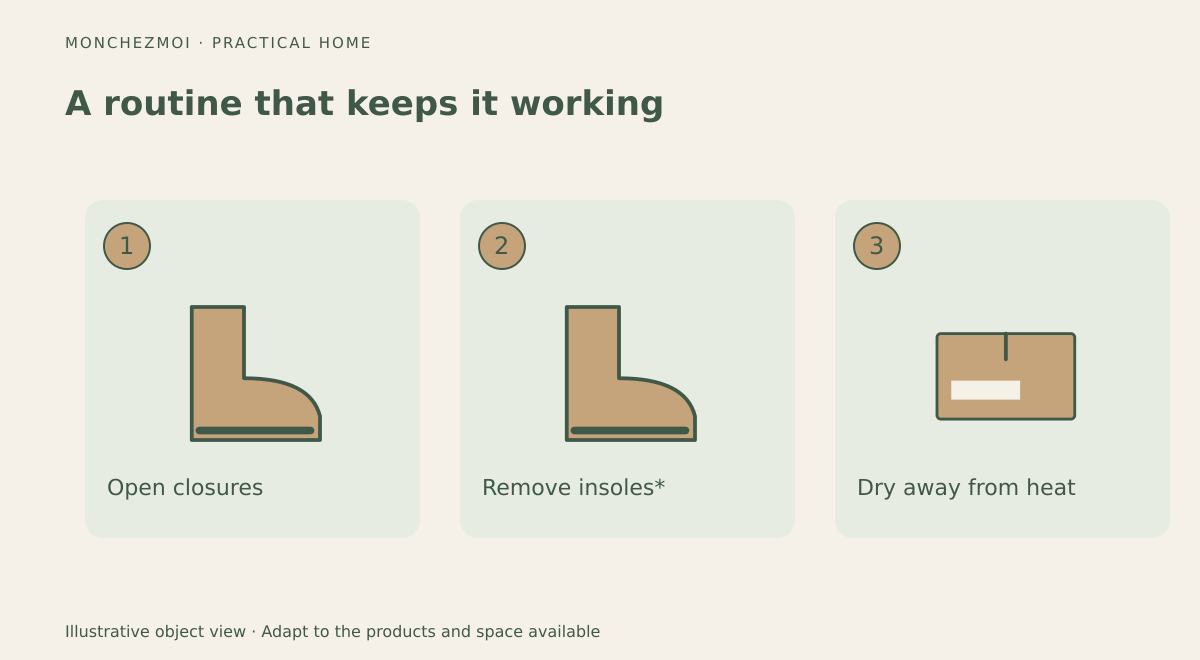
Loosen laces, open closures and remove insoles if the footwear maker allows it. Damp insoles can dry separately. Absorbent paper placed inside some boots can help draw out moisture; replace it when wet and avoid materials that may transfer ink or damage delicate linings.
Give dry footwear its own destination using our small-entryway shoe storage ideas, leaving the arrival zone available.
Design for the number of people using it
For one person, a tray and a pair of open drying positions may be enough. A family may need a longer tray and individually assigned spaces. Give frequently worn boots the most accessible positions and move dry footwear into normal storage so the station does not become a permanent pile.
Keep gloves and hats on a separate ventilated rack if they are wet. Hanging soaked accessories directly over boots can simply transfer water from one item to another.
Protect the floor from salt and slush
Sweep up grit before it scratches hard surfaces. Wipe up salty water promptly and use cleaning methods approved for your floor type. Do not rely on an absorbent mat alone if it remains saturated for hours; it can hold moisture against the surface underneath.
Bulky seasonal equipment needs a separate system, described in our guide to winter sports gear storage.
Watch the room's humidity
Drying several pairs of boots adds moisture to indoor air. If condensation forms on windows or the entryway develops a musty smell, improve ventilation and investigate whether indoor humidity is too high. A small hygrometer can reveal trends, but a drying station should not require a particular humidity number to function.
A low-cost setup
The essentials are straightforward: one stable tray, an open rack, a place for removable insoles and a routine for emptying water. That arrangement solves most of the daily problem without expensive powered dryers or permanent renovation.